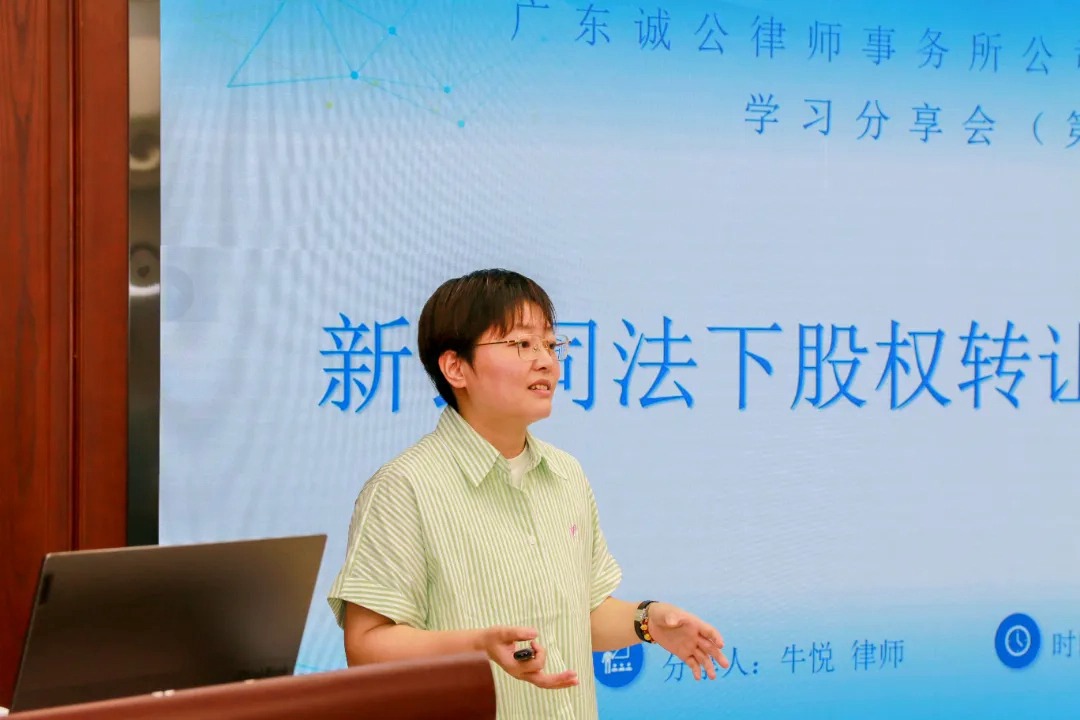
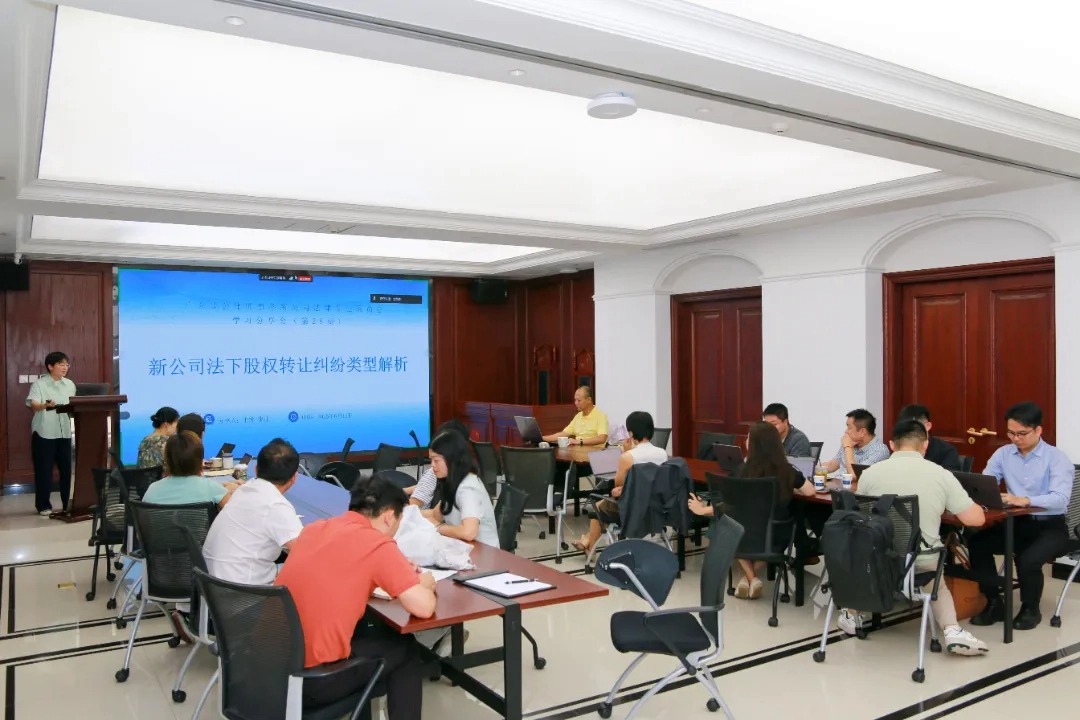
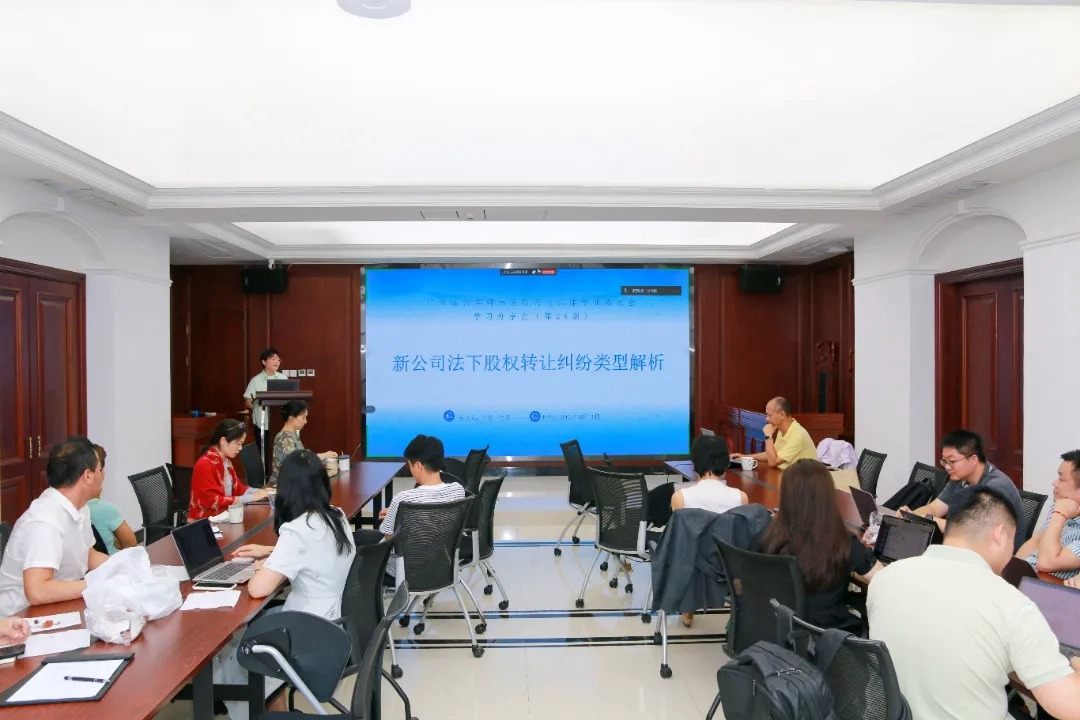
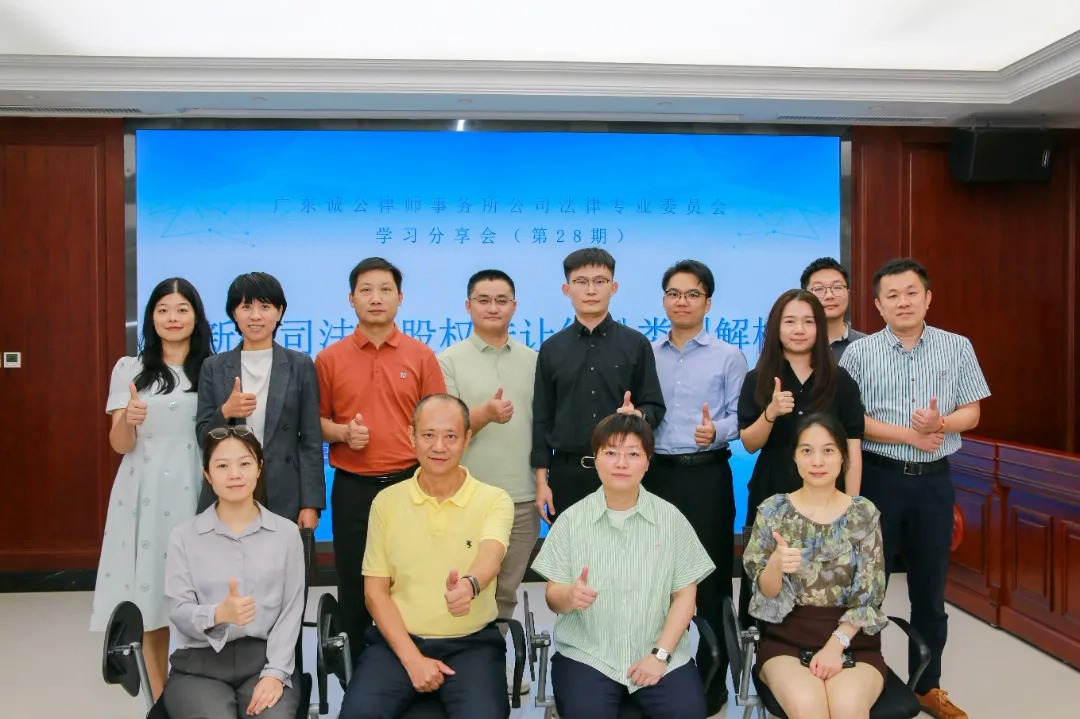
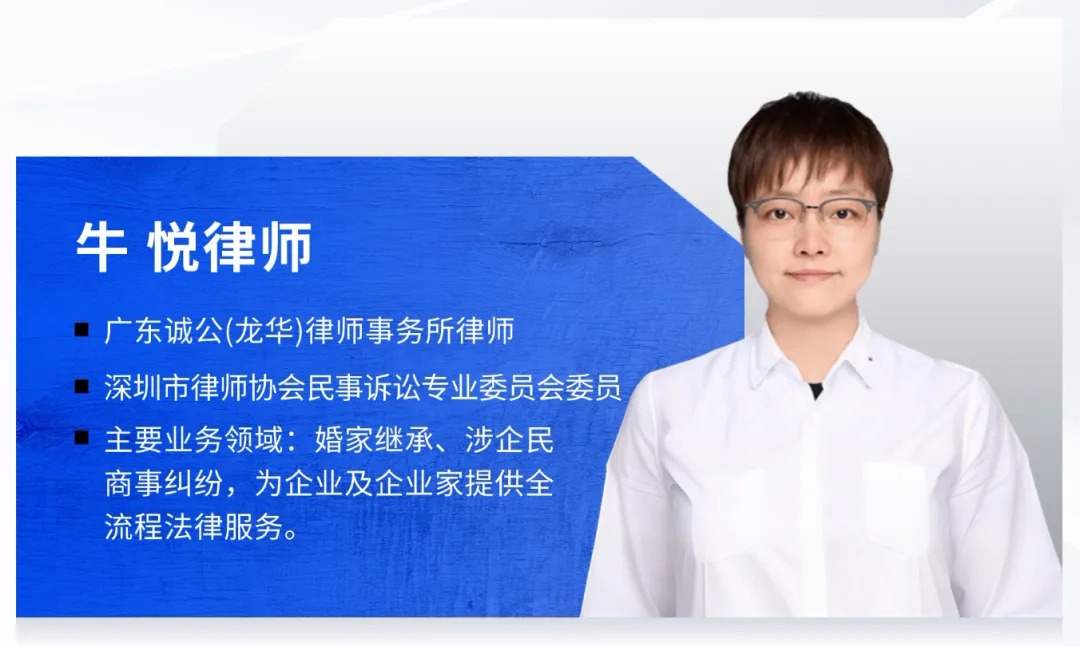
Recently, the 28th professional sharing session of the Corporate Law Professional Committee of Guangdong Chenggong Law Firm was held as scheduled. Lawyer Niu Yue, a member of the Civil Litigation Professional Committee of the Shenzhen Bar Association and practicing at Guangdong Chenggong (Longhua) Law Firm, delivered a professional sharing session titled "Analysis of Types of Equity Transfer Disputes under the New Company Law." Combining authoritative data, key points of new regulations, and practical cases, the session provided both theoretical depth and practical value.
Participants at the scene focused on the difficulties in the application of law, conducted in-depth exchanges on practical challenges, and sparked a wealth of professional insights.
一 Data Insight: Why Equity Transfer Disputes Have Become a "Major Problem Area"
At the start of the sharing session, Lawyer Niu Yue began with a set of judicial data: equity transfer disputes account for as much as 41% of "disputes related to companies," consistently ranking first over the years. These cases span the entire country, involve a wide range of subject matter amounts, and feature complex legal relationships.
This set of data not only visually reveals the high frequency of equity transfers in corporate operations but also underscores the underlying legal risks involved—clarifying the compliance logic of equity transfers has become a mandatory lesson for both enterprises and legal practitioners.
Understanding the prevalence and severity of disputes is the first step in building an effective prevention mechanism.
二 Legal Foundations: Core Rules of Equity Transfer under the Framework of the New Company Law Lawyer Niu Yue first focused on the core provisions of the new Company Law closely related to equity transfer (Articles 71-75 and 142-147), systematically explaining the legal attributes of equity as a special property right:
1.From the perspective of the nature of the right, equity combines dual attributes of property right and membership right. Its transfer not only involves the circulation of property but also relates to adjustments in the company's governance structure.
2.From the perspective of effective conditions, it is necessary to clarify the boundaries of legal effects across different stages, including contract formation, shareholder register updates, and industrial and commercial registration.
3.From the perspective of rule application, revisions to provisions such as pre-emptive rights, autonomy of the articles of association, and the timing of equity transfer in the new Company Law have restructured the basic logic of equity transfer.
Consolidating this legal theoretical foundation provides a "coordinate system" for the subsequent analysis of dispute types.
三 Focus on the Resolution of Various Types of Equity Transfer Disputes Lawyer Niu Yue, through typed disputes such as those over the performance of equity transfer contracts, disputes over the validity of equity transfer contracts, defects in equity and disclosure of asset status, assumption of liabilities after equity transfer, restrictions from laws, regulations, and the articles of association, equity holding in trust and objections to enforcement, transfer of corporate control, transfer of partial rights and powers of equity, and equity transfers where the form does not match the substance, combined with the confusion encountered in her own work and specific project cases, conducted in-depth reflections and discussions.
First, everyone focused on the core revisions of the new Company Law concerning equity transfers:
1.解析优先购买权规则--取消“过半数同意”后的行权要点、“同等条件”认定、规避行为防范等。
2.探讨公司章程自治--“另有规定”的边界与效力,如限制性条款的合理性审查、程序要求、对抗效力。
3.明确股权变动时点--股东名册记载与工商登记的关系及“一股二卖”中的善意取得问题。
通过系统梳理新法确立的基本转让规则及其关键变化,为后续分析各类纠纷提供法律依据和分析框架,把握新法下股权转让的合规起点。
其次,探讨出资责任新规与风险应对,重点解读新《公司法》第88条关于出资责任承担的重大调整:
1.未届出资期限转让:解析转让人与受让人承担连带责任的新规则,探讨其适用条件、责任范围、溯及力及“正常商业行为”与“恶意逃废出资”的区分。
2.未按期出资(含抽逃)转让:分析受让人“知道或应当知道”的认定标准、审慎核查义务边界以及责任承担与追偿机制。
3.涉及特殊情形:如以瑕疵股权再出资的责任认定与风险防范。
通过深入剖析新法对出资不实股权转让责任分配的根本性改变。提示该条款对交易各方尤其是转让方带来的重大法律风险,并提供风险识别与防范的思路。
第三,梳理高频非典型场景,针对股权转让实践中常见的特殊动因及其引发的法律问题展开探讨:
1.效力争议:如合同显失公平、出资瑕疵/抽逃对合同效力的影响、转让方披露义务。
2.公司结构变化:合并分立中股东责任与资产分配争议。
3.权利行使:异议股东回购与对赌回购的异同、“主要财产”认定。
4.身份关系变动:股东/员工离职退股--“人走股留”、股权继承、离婚分割--确权与补偿、优先购买权冲突等。
通过对以上高频非典型场景梳理,将法律规则应用于复杂多变的现实场景,解析在如对赌、离婚、继承等非纯粹买卖关系下进行股权转让或涉及股权变动的特殊法律问题,提升处理复杂案件的实务能力。
第四,探讨新法背景下依然突出的股权代持问题:
1.法律关系性质与各方权利义务,如:隐名股东权利边界、显名条件与证明、显名股东处分效力、对抗执行等。
2.代持效力禁区:如金融、拟上市/上市公司领域及风险后果。
与会者共同探讨实务操作中的风险防控与争议解决要点,系统解析代持这一特殊持股方式下的核心法律风险点和司法裁判规则,为设计代持方案、处理代持纠纷提供法律指引。
股权转让作为公司资本运作的重要方式,关乎股东权益调整,影响公司的治理结构与经营,股权转让的方式多样化、程序繁琐、伴随诸多法律风险,应强调精细化操作和风险预判的重要性,为保障交易安全和各方权益,建议咨询专业律师或顾问,进行方案设计和风险评估。
最后,公司委主任郑涛律师分享了股权转让实务中的专业见解:其实,《公司法》可以取消股东名册制度(工商登记已实现同等功能),或参考香港注册公司“绿盒子”方式进行优化。在诉讼策略层面,郑律师通过精准把握履行节点、强化原被告证据交叉印证、适时启动股权价值评估等关键技巧,合法、合理、合情地引导法官心证,有效帮助当事人规避风险、减少损失,切实提升司法效率与效果。
合影留念
本期讲师