CN

Corporate Committee Session 39 | Comparative Study on Company Law in Mainland China and Hong Kong

Source:Guangdong Chenggong Law Firm
Author:Guangdong Chenggong Law Firm
09
06
undefined

Session 39


Case Sharing

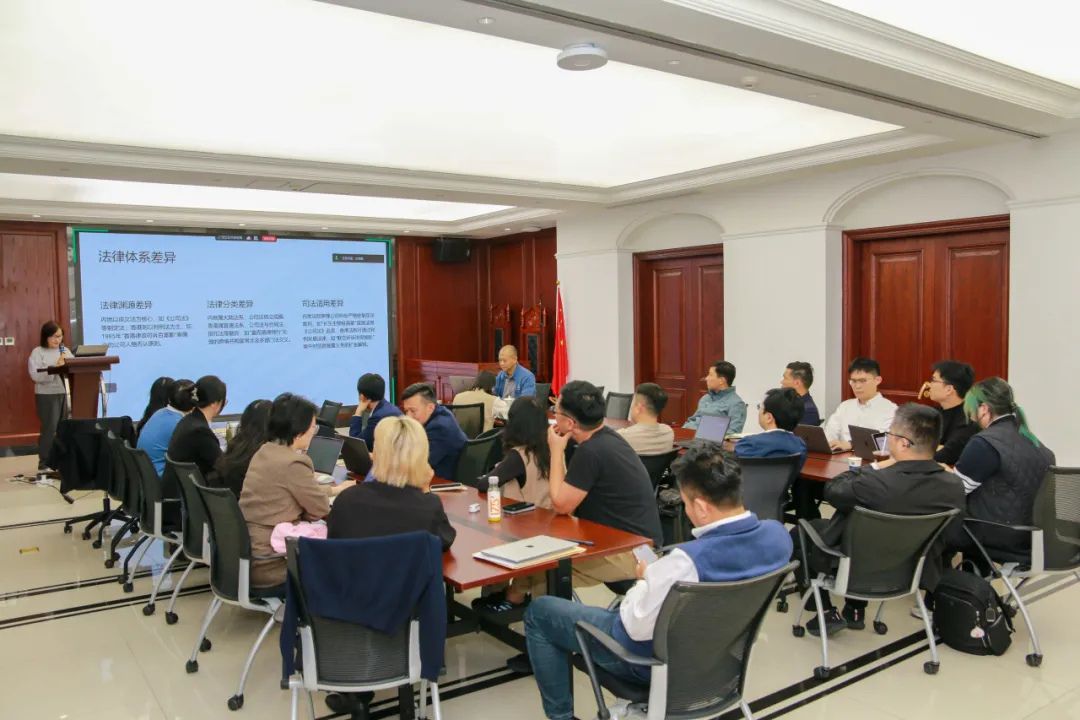
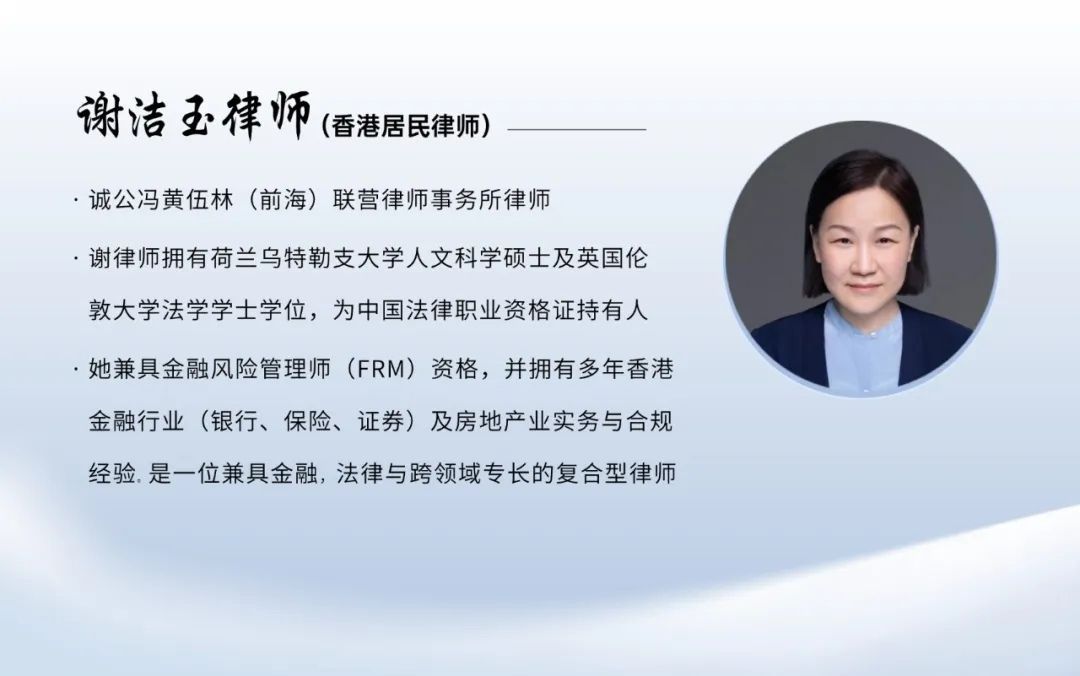
The Corporate Law Professional Committee of Chenggong Law Firm held its recent study and sharing session, presented by Hong Kong resident lawyer Xie Jieyu. The session centered on the distinctions between Hong Kong and Mainland company law, covering areas such as the legal system and sources, registered capital regime, tax principles, and the unique dual-system characteristics of Hong Kong company law, while facilitating in-depth discussion and exchange.


undefined
undefined


ONE

A Comparative Study of Company Law in Mainland China and Hong Kong


1. Legal System and Sources  

Mainland China centers on statutory law, such as the Company Law and other enacted legislation. Hong Kong primarily follows case law, supplemented by statutory ordinances; for instance, the principle of "piercing the corporate veil" (disregard of corporate personality) has been established through a series of classic precedents.  


2. Registered Capital System  

Under Hong Kong company law, registered capital adopts a subscription system. For example, a Hong Kong trading company with a registered capital of HKD 1 million may pay it in as needed, with no requirement for full upfront payment at registration; the typical starting registered capital is HKD 10,000, with no mandatory capital verification. Mainland China’s revised Company Law, effective July 1, 2024, shifts to a "limited-term subscription system," requiring shareholders of limited liability companies to fully pay subscribed capital within five years of the company’s establishment, while strengthening capital contribution disclosure and breach liability. However, there is still no mandatory requirement to submit an auditor’s capital verification report to the registration authority upon incorporation.  


3. Company Seals  

Hong Kong company seals require no filing and do not hold decisive legal effect; "director signatures" or "execution by deed" form the core of legal validity. In Mainland China, companies typically engrave multiple seals with distinct functions based on operational needs, each with clearly defined scopes of use. Seal engraving is compulsory, and companies must legally engrave seals and file them with the public security authorities after incorporation.  


4. Registration Certificates  

Hong Kong limited companies must obtain a Certificate of Incorporation and a Business Registration Certificate; unlimited companies/partnerships only hold a Business Registration Certificate. Mainland Chinese companies receive a Business License issued by the Market Supervision Administration.  


5. Supervisory Mechanisms  

Mainland Chinese companies establish a supervisory board (or a supervisor/board audit committee). For example, in 2023, Vanke’s supervisory board exercised its supervisory authority by raising objections to a senior executive compensation proposal. Hong Kong relies heavily on independent directors and board committees for oversight. The Hong Kong Stock Exchange mandates that companies listed on the Main Board appoint at least three independent non-executive directors; Tencent’s board comprises 40% independent directors to oversee decision-making.  


6. Shareholder and Director Requirements  

Mainland China requires shareholders to be natural persons or legal entities—for instance, Alibaba Group, as a legal entity shareholder, invests in and establishes subsidiaries. Hong Kong permits natural persons, legal entities, trusts, etc.—such as the Li Ka-shing family trust holding shares in CK Asset Holdings. Mainland directors must be at least 18 years old, with no major adverse credit records or statutory disqualifications (e.g., being on the list of dishonest persons subject to enforcement); for example, a listed company faced regulatory penalties when its director was included in the list of dishonest persons. Hong Kong allows foreign nationals and, in specific private companies, permits legal entities to serve as directors—HSBC Holdings’ board includes members of multiple nationalities. Mainland directors must fulfill duties of loyalty and diligence; for instance, a company director was ordered to pay compensation for providing unauthorized guarantees. Hong Kong emphasizes that directors owe heightened fiduciary duties to the company as a whole; for example, HKEX listing rules require directors to strictly disclose conflicts of interest.  


7. Taxation Principles  

Mainland China adheres to the principle of taxation by law, with numerous tax categories and multiple tax brackets. Hong Kong implements a low-tax and territorial taxation system, with a standard profits tax rate of only 16.5%, and imposes no value-added tax or capital gains tax.  


8. Audit Requirements  

Mainland China requires annual financial statements of all companies (including foreign-invested and domestic enterprises) to undergo auditing—for instance, A-share listed companies and general limited liability companies must engage qualified accounting firms for audits. Hong Kong similarly requires annual financial statements of all registered limited companies (whether public or private) to be audited by practicing accountants, unless the company lawfully applies for and obtains "dormant" status exempting it from this requirement.  


9. Annual Filing Requirements in Hong Kong  

Under Hong Kong’s Companies Ordinance, all locally registered limited companies must generally prepare audited annual financial statements each year, regardless of business activity, unless exempted. Additionally, the Annual Return is a statutory report submitted to the Companies Registry to update static information such as the company’s basic structure, directors, and shareholders. It is entirely distinct from the "audited financial statements" and the "tax return" submitted to the Inland Revenue Department, and does not involve profit data.  


10. Company Secretary  

Under Hong Kong’s Companies Ordinance, all registered limited companies must appoint a secretary (a statutory company secretary, who may be a qualified Hong Kong resident or a licensed trust corporation). The secretary independently performs statutory duties, representing the company in submitting documents such as the Annual Return to the Companies Registry. In Mainland China, the company secretary (board secretary) under the Company Law is a senior management officer of listed companies, primarily accountable to the company and shareholders, ensuring timely and accurate information disclosure and implementing board resolutions. Hong Kong and Mainland China have fundamentally different requirements for the qualifications, legal status, and functional positioning of company secretaries.  


11. Differences in Legal Sources of Shareholders’ Pre-emptive Rights  

Mainland China’s Company Law stipulates that the pre-emptive right of shareholders in a limited liability company is a statutory right (unless otherwise provided in the articles of association). Under Hong Kong law, the pre-emptive right of shareholders in a limited liability company is a contractual right, typically stipulated by the company’s articles of association or shareholder agreements, falling within the scope of corporate autonomy.


 TWO

The Dual System of Hong Kong Company Law


Statutory law provides the framework for case law and regulates the foundational order of transactions; case law supplements the gaps in statutory law, with the two mutually constraining and coordinating.


1. Regulation by Statutory Law

The Companies Ordinance (Cap. 622) primarily governs company registration and incorporation requirements, regulates shareholders' rights and obligations, and defines directors' duties and liabilities. The Companies (Winding Up and Miscellaneous Provisions) Ordinance (Cap. 32) regulates company winding-up procedures, supervises the disposal of company assets, and handles miscellaneous company affairs.


2. Interpretation and Development through Case Law

Case law follows the principle of literal interpretation, with purposive interpretation as a significant method. Through judges' judicial interpretation of legal texts, it fills gaps in statutory law and creates new rules at the micro level.


3. Common Law and Milestone Cases in Hong Kong Company Law

Salomon v Salomon & Co Ltd: Established the principles of separate corporate personality and limited liability of shareholders.

Re Sequana SA: Clarified that directors' fiduciary duties shift towards creditors' interests when a company is nearing insolvency.

Foss v Harbottle: Laid the foundational principles of derivative actions and the capacity of a company to sue.

Royal British Bank v Turquand: Established the "indoor management rule" protecting bona fide third parties.


4. Significant Cases in Hong Kong Company Law

Re Days Impex (Hong Kong) Ltd clarified directors' liabilities in fraudulent trading; Target Insurance Co Ltd served as a warning regarding directors' personal liabilities in litigation; Asia Cement (China) Holdings Corp v China Resources Cement (Holdings) Ltd regulated litigation involving contests for control of listed companies; FamilyMart China Holding Co Ltd v FamilyMart (Hong Kong) Co Ltd defined conflicts between arbitration clauses and winding-up jurisdiction; the Kwong Keung Restaurant winding-up case established precedents for winding up overseas parent companies in Hong Kong due to unfair prejudice and for protecting minority shareholders' interests in family businesses; the China Shanshui Cement Group Ltd shareholder dispute clarified directors' duties of good faith and the criteria for judging the purpose of issuing new shares.


5. Key Principles Established by Cases

(1) Criteria for Determining Unfair Prejudice Conduct: In relevant case law, courts have clarified that the infringement of shareholders' legitimate expectations constitutes unfair prejudice. For instance, a company failing to distribute profits to minority shareholders as per long-standing agreements without just cause, or depriving them of management rights, may constitute such conduct.

(2) Conditions for Applying Shareholder Remedies: Foss v Harbottle established the "majority rule" and the principle that the company is the proper plaintiff. Exceptions arise when majority shareholders abuse control to commit a "fraud on the minority," allowing minority shareholders to apply for court-ordered derivative actions or other relief.

(3) Duty to Manage Company Affairs in Good Faith: Classic precedents indicate that directors must act bona fide for the benefit of the company as a whole. Utilizing authority to transfer company assets for personal gain or dilute equity constitutes a breach of fiduciary duty and unfair prejudice.


6. Court Jurisdiction Principles

When handling cross-border disputes, courts typically consider a combination of the "place of incorporation principle," the "principle of central control and principal place of business," and the "principle of location of assets" to establish jurisdiction.


7. Overview of Core Principles and Applicable Regions

The doctrine of stare decisis is a core principle of common law. When handling complex company law cases, Hong Kong courts frequently cite classic precedents from the UK Supreme Court, the Privy Council, and other jurisdictions sharing the common law tradition, thereby establishing cross-jurisdictional judicial consistency. The renowned UK case of Salomon v Salomon & Co Ltd (1897), which established the principle of limited liability for shareholders, remains a cornerstone of Hong Kong's Companies Ordinance to this day.


Cross-Border Applicability: Its case law spirit widely applies to Hong Kong and other common law jurisdictions (e.g., Singapore, the Cayman Islands, Bermuda). In cases involving cross-border winding-up and restructuring of China-concept stocks, reciprocal recognition and citation of precedents among Cayman, Hong Kong, and UK courts are commonplace.


8. Reform and Development of Hong Kong Company Law

Following the major overhaul of Hong Kong company law in 2014, the director accountability system was strengthened, and outdated concepts such as "ultra vires" and nominal share capital were abolished, enhancing shareholder protection.


Recent Developments (2023–2026): In 2023, the Hong Kong government released the Companies (Transborder Merger) Bill and continued to advance legislation. This regime allows overseas offshore companies (e.g., from the Cayman Islands or BVI) to directly "seamlessly" relocate their place of incorporation to Hong Kong without changing the legal entity or interrupting existing contracts. This significant reform aims to attract multinational corporations to establish regional headquarters, simplify the repatriation process for red-chip structure enterprises, and help companies effectively address increasingly stringent "economic substance requirements" in offshore jurisdictions, thereby deeply integrating into Hong Kong's low-tax regime and the developmental advantages of the Greater Bay Area. Furthermore, the new policies further facilitate daily business operations and align with post-listing continuous regulation by introducing the legal validity of virtual meetings, optimizing weighted voting rights structures, and strengthening compliance disclosures regarding significant controllers.


undefined


Through this sharing session's comparative study of Mainland and Hong Kong company law, Lawyer Xie Jieyu summarized the characteristics of Hong Kong company law: Hong Kong companies enjoy relatively high degrees of business and institutional freedom, yet face stringent requirements regarding director probity and procedural compliance. Once violations occur, the pursuit of civil liability and criminal sanctions can be severe.


The Corporate Law Committee will continue to focus on research in corporate law and practice. We welcome all colleagues to stay engaged and actively participate in future exchanges.


Group Photo 


undefined


Speaker of This Session


undefined